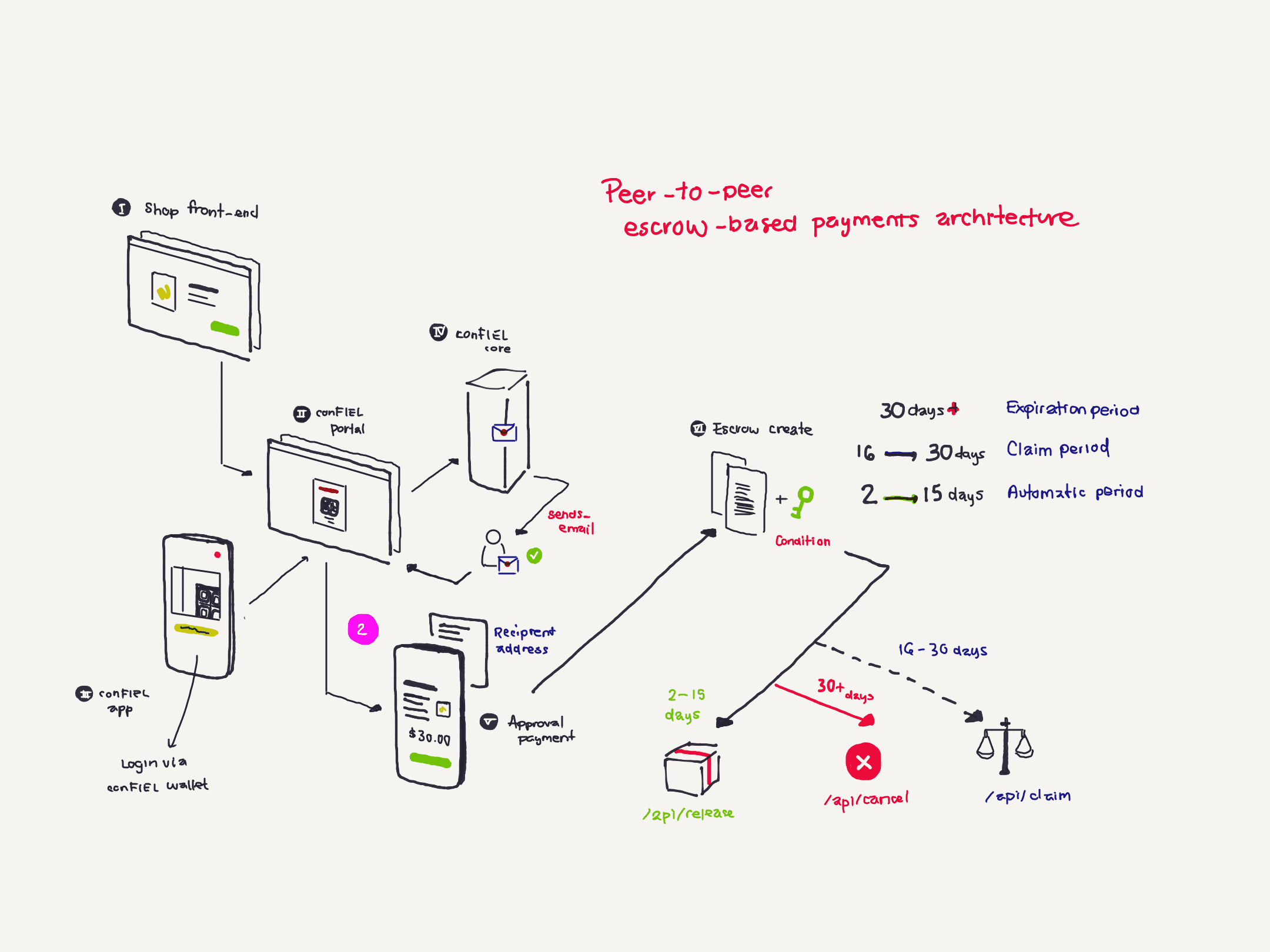
conFIEL Core
conFIEL core is an SDK used to generate KYC-payments peer-to-peer escrow-based
payments using the XRP Ledger network. By leveraging
escrowCreate, a payment can have a custom condition to ensure payment
for an item is only released after the payment has been made or the expiration
time has passed, given enough time for resolution in case of payment disputes.
conFIEL ID
KYC-ready payments require a wallet derived from a .cer stamped
by a CA, and generated by it's self-custodied RSA 2048 private keypair. The
key is managed via a PWA called conFIEL ID which is able to generate
the wallet based on this information. conFIEL ID uses
RSASSA-PKCS1-v1_5 signatures over a pbkdf2 unique
secret string to generate a BIP39 seed phrase for our wallet, to avoid using
only the RSA private key as a source of entropy.
import * as crypto from "crypto";
import * as bip39 from "bip39";

// Assuming we have already imported the RSA private key into crypto.KeyObject:
// const privateKey: crypto.KeyObject = ...

async function generateSeedFromPin(
  pin: string,
  privateKey: crypto.KeyObject
): Promise<string> {
  // 1. Derive a PBKDF2 string from the user's 6-digit pin input.
  const salt = crypto.randomBytes(16);
  const pbkdf2DerivedKey = crypto.pbkdf2Sync(pin, salt, 10000, 256, "sha256");

  // 2. Sign the derived PBKDF2 string using the RSA 2048 private key.
  const sign = crypto.createSign("SHA256");
  sign.update(pbkdf2DerivedKey);
  const signature = sign.sign(privateKey);

  // 3. Generate a BIP39 mnemonic seed phrase from the RSA signature.
  // Note: You might need to adjust the length to match the requirements for a valid BIP39 seed.
  const seed = signature.slice(0, 32); // Use first 32 bytes (256 bits)
  const mnemonic = bip39.entropyToMnemonic(seed.toString("hex"));

  return mnemonic;
}

// Example usage
// const mnemonic = await generateSeedFromPin('123456', privateKey);
// console.log(mnemonic);
Once the private key has been imported into conFIEL ID, the wallet can then
sign transactions as any traditional secp256k1 wallet. However, it will include within
the Memos field a tag with encrypted payload of the recipient’s
public key (included in the .cer file). The tag can only be
decrypted by the recipient’s RSA 2048 equivalent private key.
import * as forge from "node-forge";
import * as fs from "fs";

// Load the .cer file and convert it into a forge certificate object
function loadPublicKeyFromCerFile(filePath: string): forge.pki.PublicKey {
  const fileContent = fs.readFileSync(filePath, "binary");
  const certDer = forge.util.decode64(fileContent);
  const certificate = forge.pki.certificateFromAsn1(
    forge.asn1.fromDer(certDer)
  );

  return certificate.publicKey;
}

// Encrypt a string using the provided public key
function encryptStringWithPublicKey(
  payload: string,
  publicKey: forge.pki.PublicKey
): string {
  const encrypted = publicKey.encrypt(
    forge.util.encodeUtf8(payload),
    "RSA-OAEP"
  );
  return forge.util.encode64(encrypted);
}

// Example usage
const cerFilePath = "./path_to_your.cer";
const publicKey = loadPublicKeyFromCerFile(cerFilePath);
const payload = JSON.stringify(transactionDetailsSignedByRSAkey);
const encryptedPayload = encryptStringWithPublicKey(payload, publicKey);

console.log("Encrypted Payload: ${encryptedPayload}");